

Shop by Goal
Shop by Category
Shop by Ingredient
Here's 10$ off from your friend
Discount code copied!
* This offer expires in 3 days
Home/Blog/What Vitamins Should You Take Daily?
What Vitamins Should You Take Daily?
By Rachel Link, RD, MS
September 24, 2026

Eating a near-perfect diet isn’t easy to do. And even when you think you do, you learn that many healthy foods, such as fruits and veggies, that are grown conventionally (non-organically) often lack nutrients we’d expect them to have.
Supplements, in particular vitamins and minerals, are one way we can help meet our needs for vitamins and minerals. So what kinds of vitamins should you take daily? This depends on factors such as your age, gender, activity level and diet.
While supplement routines should be individually tailored to our specific health goals, some vitamins that are commonly recommended for adults include vitamins C, D, B12 and others.
Of course, you should always consult your healthcare professional before beginning any new dietary or lifestyle regimen, including taking dietary supplements. Likewise, if you are pregnant, nursing, allergic, have a medical condition or are taking any medications, consult a doctor first.
Are you missing certain nutrients in your diet?
Is it really worth taking vitamins every day? If you know or suspect that you’re lacking certain nutrients (there are common nutrient shortfalls for women and men) in your diet, then yes, it most likely is.
In general, a balanced and nutritious diet can provide most or all of the vitamins and minerals we need to maintain good health. However, in certain cases, such as if someone eats a restrictive or limited diet, then supplements may be very beneficial. Certain vitamins and minerals may also be supportive for the general population because they play beneficial roles in functions, such as supporting a healthy immune system and promoting overall metabolic health.
To understand how much of each vitamin and mineral to take, we refer to Recommended Daily Allowances (or RDAs). RDAs are guidelines that specify the average daily intakes of essential nutrients that are required to meet the nutritional needs of people of different ages and genders.
RDAs are set by health organizations, such as the U.S. Food and Nutrition Board. Suppose we meet our RDAs for vitamins, minerals and macronutrients (such as protein, carbohydrates and fat) with help from our diets and supplements. In that case, we can be confident we’re covering our nutritional bases.
What vitamins should I take daily?
For the most benefits, you’ll want to tailor your supplement routine to any health goals you have, as well as your age and gender.
Below, we're covering both vitamins and minerals that most adult men and women should consume daily, ideally from a combination of healthy food sources and supplements.
1. Vitamin D
What are the top three most important vitamins to take if you only get to choose several? Most experts would agree that vitamin D tops the list, considering it’s a common deficiency.
We get most of our vitamin D from sunlight exposure; however, many adults (and children) don’t spend enough time outdoors to absorb enough.
You can either take vitamin D as part of your multivitamin or take it individually. However, it’s best absorbed when taken with a meal that contains some fat, since it’s a fat-soluble vitamin.
Supplement options:
Ancient Nutrition's vitamin D supplement is expertly formulated with real food sources and optimized for absorption. It contains 125 mcg (5,000 IU) of organic, probiotic-fermented vitamin D, which is 625 percent Daily Value. it supports healthy immune system function, bone health and cardiovascular function.
Ancient Nutrition's Liposomal Vitamin D3 + K2 gel packs (pineapple flavored) deliver meaningful daily amounts of vitamin D3 (4,000 IU) and vitamin K2 (180 mcg) to support healthy vitamin D levels, immune system function, bone health and calcium utilization — all in a format that fits real life. These vitamins work well together, with Vitamin D helping the body absorb calcium, while vitamin K2 helps activate proteins involved in normal calcium metabolism and bone mineralization.
Also, taking a multivitamin will usually cover one’s daily requirement, including 244 percent Daily Value in both Ancient Multivitamin Women's Once Daily and Ancient Multivitamin Women's 40+ Once Daily.
Recommended Daily Intake:
Adults (19-70 years): 600-700 IU/day
Adults over 70 years: 800-1000 IU/day
2. Magnesium
Magnesium is a mineral that’s generally involved in a variety of biological processes, including protein synthesis, muscle and nerve function, normal blood glucose control, and normal blood pressure regulation.
Many people run low in this mineral; therefore, seeking out more is often a wise idea for most adults. More women than men tend to be deficient in magnesium, and it's highest among post-menopausal women and the obese.
Note that only low levels of magnesium are typically included in multivitamins.
Supplement options:
Ancient Nutrition's magnesium supplement contains 300 mg of body-friendly magnesium, which is 71 percent Daily Value. It supports a positive outlook and calmness, cardiovascular and bone health, and healthy immune system function.
Ancient Nutrition’s Active Peptides Magnesium features four forms of bioavailable magnesium including magnesium amino acid and peptide chelate, magnesium bisglycinate, magnesium citrate and liposomal magnesium oxide plus ashwagandha. It comes in capsule and powder form. It’s designed to help you relax into deeper, more restorative sleep in addition to supporting an improved mood and feeling less stressed.
Also consider Ancient Nutrition's Foundational Kits for women under 40, women over 40 and men. They include a multivitamin, magnesium (with active peptides), a probiotic and a multi protein powder. You may also be interested in the Women's Essentials Variety Pack or Women's 40+ Essentials Variety Pack, which contain all of the above except the protein powder.
Recommended Daily Intake:
Adult men (ages 19-30): 400 mg/day
Adult women (ages 19-30): 310 mg/day
Adult men (31 and older): 420 mg/day
Adult women (31 and older): 320 mg/day
Pregnant women: 350-360 mg/day
Breastfeeding women: 310-320 mg/day
3. Iron
Iron helps to support healthy blood and circulation, and it's important for women, especially premenopausal women who lose blood each month due to their menstrual cycles. Iron functions to support hemoglobin formation and the production of red blood cells that carry oxygen from the lungs to the rest of the body.
It’s estimated that 30 percent or more of the world’s total population might need an iron boost. In the U.S., it's around 5 percent of women and less than 1 percent of men.
Iron is also involved in immune system functions and the production of white blood cells, as well as energy metabolism.
Supplement options:
You’ll find 100 percent of your daily needs for iron in Ancient Multis for Women and Ancient Multis for Men.
Ancient Nutrition's iron supplement is expertly formulated with real food sources and optimized for absorption. It contains 18 mg of enzyme-activated iron, which is 100 percent Daily Value. It supports healthy fertility, prenatal and postpartum health, cognitive health, restful sleep, and cardiovascular and blood health.
Recommended Daily Intake:
Adult men (19 and older): 8 mg/day
Adult women (19-50 years): 18 mg/day
Adult women (51 and older): 8 mg/day
Pregnant women: 27 mg/day
Breastfeeding women: 9 mg/day
4. Vitamin C
Considering it has antioxidant effects and supports immune defenses, vitamin C is among the best vitamins for women as well as men. It also helps the body produce its own collagen, a structural protein that forms connective tissues found in our skin, joints, hair, nails and more.
Overall, men tend to be more lacking in vitamin C than women. In the U.S., around 14 percent of males and 10 percent of females are considered lacking in vitamin C.
Supplement options:
Ancient Nutrition's vitamin C supplement is designed to support a healthy immune system and optimized for absorption. It contains 900 mg, which is 1000 percent Daily Value.
It supports healthy immune function, healthy immune defense, healthy gut-related immunity, healthy antioxidant activity and health neuron function. It also promotes proper digestion and nutrient absorption.
Recommended Daily Intake:
Adult men: 90 mg/day
Adult women: 75 mg/day
During pregnancy and lactation: 85 mg to 120 mg/day
5. Vitamin B12
There’s a reason why vitamin B12 is considered one of the best vitamins for energy: It helps support healthy blood production and circulation.
Additionally, it’s one of the best supplements for vegetarians because it’s found mostly in animal-derived foods; therefore, people who follow plant-based diets may be lacking this nutrient.
Overall, men are more likely to have a vitamin B12 shortfall than women. One study showed that 25 percent of men had a vitamin B12 deficiency while 19 percent of women did.
Supplement options:
Ancient Nutrition's vitamin B12 supplement contains 20 mcg of co-enzymated vitamin B-12, which is 833 percent Daily Value. It supports cognitive and neurological health, restful sleep, cardiovascular and eye health, cellular energy production, and healthy recovery from exercise. It also boosts physical performance.
Ancient Nutrition's Methylated Vitamin B12 Gel Packs (passionfruit lemonade flavor) make foundational B-vitamin support easy to stick with. Each ready-to-use gel delivers methylated B12 plus methylated folate to support healthy vitamin B12 levels, nervous system function, cellular energy metabolism and healthy red blood cell formation† in a convenient format.
Taking a multivitamin — such as 9.4 mcg (392% DV) of vitamin B12 in Ancient Multivitamin Women's Once Daily as well as Ancient Multivitamin Women's 40+ Once Daily, or 10 mcg (417% DV) of vitamin B12 in Ancient Multivitamin Men's Once Daily and Ancient Multivitamin Men’s 40+ Once Daily — will also cover your daily requirement.
Recommended Daily Intake:
For adult men and women: 2.4 mcg/day
For pregnant and breastfeeding women: 2.8 mcg/day
6. Zinc
Zinc is one of the best supplements for skin health, as well as for supporting a healthy immune system. Zinc is typically taken in capsule form, either on its own or in multivitamins.
Zinc is considered one of the more common nutrient shortfalls for women and men. A 2020 study showed that up to 46 percent of men and 39 percent of women came up short in zinc.
Supplement options:
Ancient Nutrition's zinc supplement contains 20 mg of enzyme-activated zinc, which is 82 percent Daily Value. It supports healthy immune function, healthy immune defense, healthy gut-related immunity and healthy digestion. It also promotes proper digestion and nutrient absorption.
Multivitamins rarely contain 100% DV of zinc, though some come close. If you're relying on your multi to get to 100%, just make sure to check the label.
Recommended Daily Intake:
Adult men: 11 mg/day
Adult women: 8 mg/day
Pregnant and breastfeeding women: 11 mg to 12 mg/day
7. Calcium
Calcium is the most abundant mineral in the human body — stored mostly in the bones and teeth. But as we age, our ability to absorb calcium decreases. Plus, today’s soil contains less calcium and that indicates the calcium levels in foods are also declining.
Additionally, if you consume less dairy because of a lactose intolerance or dietary reason (such as being a vegan), you’re also more likely to have a calcium shortfall.
Lastly, adequate vitamin D levels are needed for calcium absorption, so if you’re short in vitamin D (see above), then you may also come up short in calcium, too.
While both women and men may be short on calcium, women over the age of 50 are particularly vulnerable.
Note that calcium does not appear in a significant amount in any multivitamin.
Supplement options:
Ancient Nutrition's calcium supplement is free of dairy and contains 574 mg of food-form calcium, which is 44% DV. It supports bone health, healthy cardiovascular function, healthy immune system function and healthy energy level.
Recommended Daily Intake:
Adults (ages 19 to 70): 1,000 mg/day
Adult men (ages 51 to 70): 1,000 mg/day
Adult women (ages 51 to 70): 1,200 mg/day
Adults age 70 and older: 1,200 mg/day
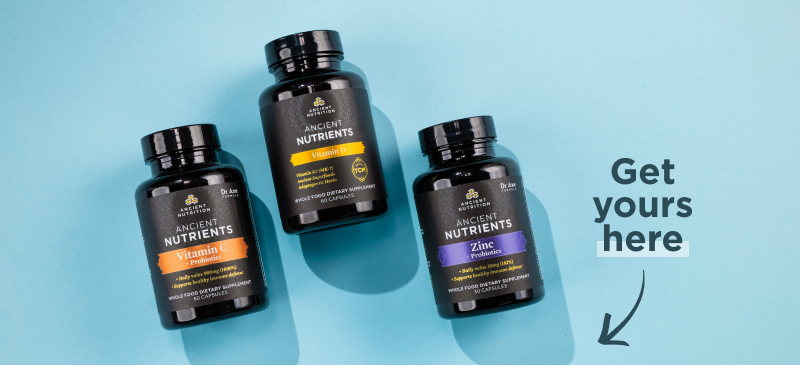
SHOP VITAMINS HERE
Frequently questions
Will a multivitamin adequately cover my essential needs for vitamins and minerals?
Each product contains a different quantity of nutrients; therefore, you always want to read the label carefully to understand how much of a vitamin and mineral you’re consuming. Along with many multivitamin benefits, many multis will contain 100 percent of your daily needs for most essential nutrients.
Can I take all of my vitamins together?
When you take a multivitamin, you’ll be taking all of the vitamins and minerals in the multi together. This is still beneficial; however, it can be even more helpful to separate certain nutrients if possible, especially if you take them in higher dosages. To maximize absorption, try taking multis in divided doses, such as 2 to 3 times per day. Note: Always read and follow label directions for use.
It also generally helps to take iron and vitamin C together, and calcium and vitamin D together. These combinations support the other’s overall absorption.
What vitamins should I not take together?
In general, some vitamins and minerals may have interactions when taken together. This means you might want to take them separately. This way they don’t compete or interfere with each other’s effects. Nutrients to typically NOT take together (or at the same time, anyway) include:
Magnesium and calcium
Vitamin C and B12
Vitamin D and vitamin K2 (in high doses)
Copper and zinc
Other minerals in high doses
What time of day is best to take vitamins?
The best time to take vitamins depends on the specific kind. The morning is typically best for multivitamins (with a meal) and any B vitamins. Nighttime is typically recommended for magnesium.
Other types are flexible in terms of timing; however, pay attention to whether they require food or not to be absorbed. “Water-soluble” types can be taken at most times, while “fat-soluble” types should be taken with a meal that contains some fat.
Should I take vitamins with food?
Fat-soluble vitamins should be taken with food. These include vitamins D, E, A and K.
Other water-soluble types, such as vitamin C and B vitamins, can be taken either with or without food. Most minerals can be taken either with or without food. If you’re taking a multivitamin, take it with a meal to support absorption. Be sure to read and follow all label directions for use, though.
As I get older, should I take more vitamins?
Once you reach your 70s, you may benefit from higher dosages of some vitamins and minerals, such as vitamin D and calcium for example. Refer to each individual nutrient’s RDA to understand how much to take depending on your age.
What other supplements are highly recommended?
Other supplements, aside from vitamins and minerals, that are often recommended include: collagen protein, omega-3 fatty acids, and probiotics/prebiotics. Collagen is among the most helpful for your joints, skin, hair, and nails, while omega-3 fats support a healthy response to inflammation. Probiotics support overall gut health, digestion, and healthy immune system functions.
Related Articles
August 22, 2023
|health
Are Soil-Based Probiotics (SBOs) Better Than Regular Probiotics?
Are all probiotic supplements the same? No! Certain types of probiotic supplements stand out when it comes to their quality, resilience and their potential health benefits.
July 22, 2026
|health
Want a Healthy Response to Inflammation? Best Foods and Supplements
The natural inflammation process impacts overall health, including the heart, brain, liver, joints and digestive system. This includes so-called inflammaging, which is inflammation associated with normal aging.
February 11, 2023
|health
Skin Cycling Routine: Steps to Take and What Products to Use
Each of us has a unique skin type with slightly different needs, meaning that some skin care products and methods are more suitable for some of us than others. What's more: Different parts of our face and our bodies require different treatments in order to stay in balance. Plus, overusing or underusing certain skin care ingredients can lead to poor results.
July 14, 2026
|health
How to Detox and Rejuvenate Your Body
Whether you realize it or not, the outside and inside of our bodies are exposed to multitudes of toxins every single day. These toxins can include environmental pollutants, food chemicals and preservatives, heavy metals, pesticides, pathogens and more. We inhale, ingest or come into contact with these toxins because that’s just part of living on this earth.




- © 2010-26 Ancient Brands, LLC. All rights reserved.
- Terms of Use
- Privacy Policy
- CPRA Privacy Policy/Notice of Collection
- Do Not Sell or Share My Personal Information
- Consumer Health Data Privacy Policy